Every two minutes, someone in the United States receives a cancer diagnosis. Globally, nearly 20 million new cases were recorded in 2024. Yet the most powerful predictor of survival — across almost every cancer type — remains unchanged: how early the disease is caught. Artificial intelligence is now rewriting what “early” means.
The Diagnostic Revolution: Where We Stand in 2026
For most of medical history, cancer detection depended on a physician’s trained eye, a laboratory’s microscope, and often — a patient’s intuition that something was wrong. By the time a tumor became visible on a standard imaging scan, it had frequently been growing for years. The diagnostic window was narrow, and missing it was catastrophic.
In 2026, that window has been dramatically widened. Deep learning algorithms trained on millions of annotated medical images, genomic sequences, and electronic health records are identifying cancer signatures that are invisible to human observers — not because physicians lack skill, but because these patterns exist below the resolution of unaided human perception.
The evidence is no longer preliminary. In the past 18 months alone, peer-reviewed studies have demonstrated AI systems detecting breast cancer in mammograms with 94.6% sensitivity (compared to 88.1% for senior radiologists), identifying early-stage lung nodules in low-dose CT scans with a false-positive rate 40% lower than standard radiologist reads, and screening colorectal cancer from routine blood samples with 83% accuracy — years before symptoms appear.
The Five Cancers Being Transformed by AI Screening
1. Breast Cancer: Where AI Entered Clinical Practice First
Mammography AI has the longest clinical track record of any cancer detection application. Google Health’s LYNA system, first published in Nature in 2020, has since been refined through multiple clinical validation studies and is now deployed across NHS screening programs in the United Kingdom and regional health systems across Scandinavia and Australia.
A landmark 2025 study published in The Lancet Oncology tracked 80,000 women through a randomized trial comparing AI-assisted screening versus double-reading by radiologists. The AI-assisted arm detected 20% more cancers at Stage I and reduced radiologist workload by 44% — while maintaining equivalent specificity. The trial’s lead author, Professor Kristina Lindqvist of Karolinska Institutet, summarized the findings succinctly: “AI is not replacing the radiologist. It is giving the radiologist a second set of eyes that never tires.”
2. Lung Cancer: Catching the Silent Killer Earlier
Lung cancer kills more people annually than breast, colorectal, and prostate cancers combined — primarily because over 70% of cases are diagnosed at Stage III or IV, when curative surgery is no longer viable. The five-year survival rate for Stage I lung cancer is 92%. For Stage IV, it falls to 10%.
AI is attacking this survival gap through two parallel approaches. First, deep learning nodule detection systems embedded within low-dose CT (LDCT) screening programs are flagging sub-centimeter lesions with a consistency that neither time-pressed radiologists nor legacy computer-aided detection (CAD) systems could achieve. Second — and more controversially — liquid biopsy AI platforms are analyzing circulating tumor DNA (ctDNA) fragments in standard blood draws to detect lung cancer signatures up to four years before a lesion becomes radiographically visible.
In a 2026 preprint from the University of California, San Francisco, a transformer-based model trained on ctDNA methylation patterns detected early-stage non-small cell lung cancer (NSCLC) with 78% sensitivity at 98% specificity in a 14,000-patient validation cohort — a performance that has triggered urgent discussions about population-level blood-based screening programs.
3. Colorectal Cancer: AI in the Colonoscopy Suite
Colonoscopy is one of medicine’s most effective cancer prevention tools — but its efficacy is directly dependent on physician attention and experience. Adenoma miss rates in standard colonoscopy range from 22–26% in published audit data. AI-assisted colonoscopy systems, which overlay real-time polyp detection alerts onto the endoscopy video feed, are closing this gap with measurable clinical impact.
Medivation’s EndoAI platform, which received FDA 510(k) clearance in late 2024, reduced adenoma miss rates to 8.7% in a multi-center randomized trial — a 66% relative reduction. The system processes each video frame in under 40 milliseconds, flagging suspicious lesions with bounding boxes before the endoscopist moves past them. Over 600 hospitals in the United States now use AI-assisted colonoscopy as standard practice.
4. Skin Cancer: Smartphone Diagnostics at Scale
Dermatology AI occupies a unique position in the cancer detection landscape because it democratizes specialist-level screening through devices that billions of people already own. Convolutional neural networks trained on dermoscopic images have demonstrated classification accuracy for melanoma that matches or exceeds board-certified dermatologists across multiple independent validation studies.
In 2026, the most significant development is the proliferation of validated smartphone applications in low- and middle-income countries, where dermatologist-to-population ratios can be as low as 1 per 500,000 people. A WHO-sponsored pilot program in 14 sub-Saharan African nations, deploying a smartphone AI screening tool developed by Skin Analytics and the African Cancer Institute, has screened over 180,000 patients in 24 months — identifying 3,200 cases of suspected melanoma and squamous cell carcinoma that would otherwise have gone undetected.
5. Prostate Cancer: Reducing Overdiagnosis with Precision AI
Prostate cancer presents a different AI challenge: not just detection, but avoiding the overdiagnosis of indolent tumors that would never cause harm but subject patients to unnecessary treatment and its side effects. AI pathology systems trained on whole-slide prostate biopsy images are now achieving two things simultaneously — detecting clinically significant cancer with higher sensitivity than standard Gleason grading, while correctly classifying low-grade lesions as surveillance-appropriate rather than requiring immediate intervention.
A 2025 study in Nature Medicine demonstrated that an AI-augmented pathology workflow reduced unnecessary radical prostatectomies by 31% without missing any high-grade cancers in a 6,800-patient cohort — a finding with profound implications for both patient quality of life and healthcare system costs.
The Technology Behind the Breakthroughs
Understanding why AI detects cancer more effectively requires understanding the three architectural pillars underpinning these systems.
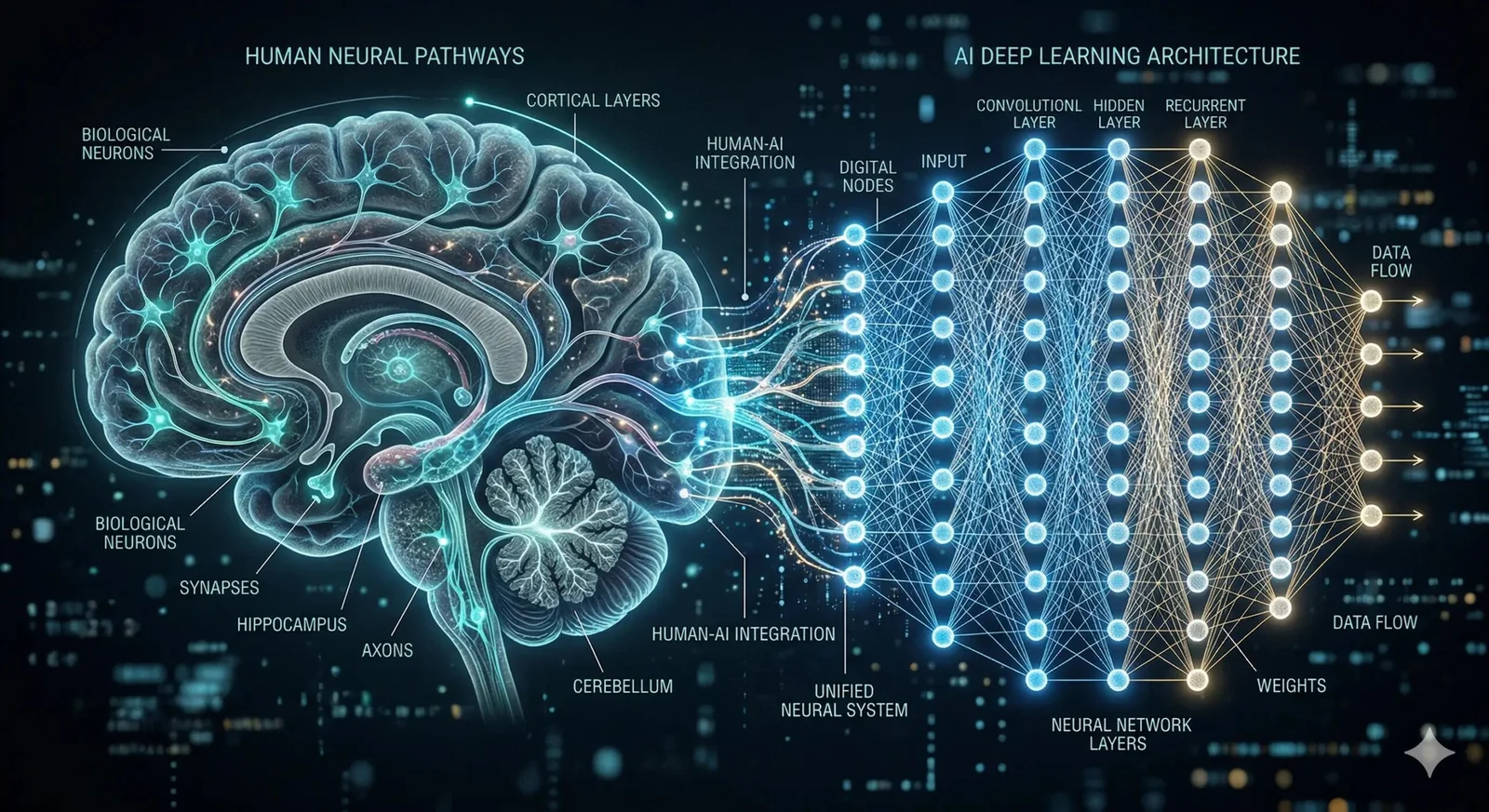
Convolutional Neural Networks (CNNs) process medical images by learning hierarchical feature representations — from low-level patterns like edges and textures to high-level pathological structures like nuclear atypia and vascular invasion. Trained on datasets containing millions of annotated images, modern CNNs achieve pattern recognition capabilities that transcend the limitations of human visual processing, particularly for subtle, multifocal lesions across large tissue areas.
Vision Transformers (ViTs) have largely superseded CNNs for the most complex imaging tasks because their self-attention mechanisms enable global context modeling — understanding how tissue in one region of an image relates to tissue elsewhere. For cancer detection, where tumor microenvironment and spatial heterogeneity are clinically meaningful, this architectural advantage is significant.
Multimodal Fusion Models represent the current frontier. Rather than analyzing a single data type, these systems integrate imaging data with genomic profiles, proteomic markers, electronic health record data, and even natural language processing of clinical notes to generate composite cancer risk scores that outperform any single-modality approach by a substantial margin.
Critical Challenges the Field Has Not Yet Solved
Honest coverage of medical AI requires acknowledging where the evidence remains incomplete and where real risks exist. Three challenges deserve particular attention.
Demographic bias in training data. The majority of AI cancer detection models have been trained on patient populations that skew toward wealthier, predominantly white patient demographics — particularly in the United States and Western Europe. Studies have consistently shown reduced performance in darker skin tones for dermatology AI, in women with dense breast tissue for mammography AI, and in populations with different dietary patterns affecting microbiome-linked colorectal risk. This is not a minor limitation: it risks exacerbating the healthcare disparities these tools purport to address.
Distribution shift in deployment. A model that achieves 96% AUC in a validation study using images from a single academic medical center may perform at 84% when deployed across community hospitals with different scanner models, imaging protocols, and patient demographics. This performance gap — called distribution shift — remains one of the most serious underreported problems in clinical AI deployment.
Regulatory latency versus clinical innovation speed. The FDA cleared 692 AI/ML-enabled medical devices in 2025 — a 340% increase from 2020. Yet the regulatory frameworks governing continuous learning systems, where AI models update in response to new clinical data after deployment, remain nascent. The speed of innovation is outpacing the governance structures needed to ensure these tools remain safe as they evolve.
What This Means for Patients Today
If you are a patient navigating cancer screening decisions in 2026, the evidence supports several clear conclusions. AI-assisted mammography screening is now available at major health systems and outperforms conventional double-reading — ask your healthcare provider whether your screening center uses AI assistance. If you are in a high-risk group for lung cancer and have not yet been screened with low-dose CT, discuss AI-augmented LDCT screening with your physician. The blood-based liquid biopsy AI platforms are not yet in routine clinical use, but multi-cancer early detection (MCED) tests using AI analysis are beginning to enter clinical guidelines in the United States and Europe for high-risk populations.
Most importantly: AI in cancer detection is not science fiction or distant aspiration. It is clinical reality, deployed at scale, in real hospitals, saving real lives today. The question is no longer whether AI can detect cancer earlier than human physicians. Multiple large-scale randomized controlled trials have answered that definitively. The questions now are about equity, access, and governance — ensuring that the patients who benefit from these tools are not only those fortunate enough to receive care at leading academic medical centers.
Conclusion: Early Detection Is the Most Powerful Medicine We Have
Cancer survival has always been a race against time. For most of the twentieth century, we ran that race with limited tools — physical examination, basic imaging, and the fallible but dedicated attention of human clinicians working under impossible workloads. AI has changed the terms of that race. It has given us the ability to start running earlier, to see further down the track, and to spot the obstacles that would otherwise remain invisible until it was too late.
The algorithms described in this article are not perfect. They inherit the biases of their training data, they can fail in unexpected environments, and they require robust governance frameworks to remain trustworthy as they evolve. But they represent the most significant advance in cancer screening since the invention of mammography — and their potential, if deployed equitably and governed responsibly, is extraordinary.
In a world where 10 million people die of cancer every year, and where the majority of those deaths occur in late-stage disease that early detection could have prevented, that potential is not academic. It is urgent.
📡 Stay Current on Medical AI — Every Friday
This is one story from a rapidly evolving field. Every week, our editorial team curates the five most important breakthroughs across all nine areas of medical AI — from diagnostics and imaging to ethics and robotic surgery — and delivers them directly to your inbox. Free, every Friday morning.
Share this article
djordjemladenovic888@gmail.com
AI health researcher and technology writer specializing in the intersection of artificial intelligence and modern medicine.